Low-or-No Cost Strategies to Reduce Your Organization’s Utility Bills
As we’ve discussed in previous blog posts, utility costs in Colorado, the greater Mountain West, and nationwide are increasing at an alarming rate. So much so that even major news organizations are noticing. A recent CNBC article outlined how U.S. electricity prices jumped 6.9% in 2025 versus headline inflation of 2.9%. Natural Gas service costs have risen even faster, with the U.S. Bureau of Labor Statistics (“BLS”) most recently reporting a 9.8% annualized increase. With more than double the rate of increase, what used to be a focus of only energy/utility professionals has now become top of mind for many.
While the reasons for the rate hikes in electricity and natural gas and potential remedies continue to be discussed in policy circles, it’s important to ask, “What can my organization do to reduce this financial burden?”. Although energy efficiency upgrades and installing renewable energy systems remain high-impact measures for cost reduction, Peak Utility Advisors also highlights no- or low-cost actions that every organization can take.
First and foremost, it’s important to assess your operations in order to understand if you are overconsuming. Conservation through optimized routines, practices, and procedures can be among the best ways to reduce utility costs with minimal investment. With many utility companies in our home state of Colorado and nationwide transitioning to Time-of-Use rates, timing of energy use is quickly becoming nearly as important as total energy consumption in determining utility costs. We’ve compiled a list below of some helpful General Strategies for reducing utility costs, as well as season-specific approaches.
General Year-Round Strategies
Shift Peak Demand: assess what high-energy equipment (e.g. machinery, dishwashers, laundry equipment, pool and spa equipment, etc.) can be run during off-peak hours for your electric utility company. Doing so will help reduce demand charges and the ratchets that impact your bill even in shoulder months.
Power Down Electronics: Establish a policy to turn off all unused computers, monitors, and kitchen appliances (like coffee makers) at the end of the day. If possible, unplug devices to ensure that there is no stand-by power (a.k.a phantom loads or “vampire power”). This electricity draw can account for up to 10% of a building’s usage.
Clear Air Vents: Ensure furniture, paper, or rugs are not blocking air intake or supply vents, which forces HVAC systems to work harder.
Optimize Lighting: Use natural daylight instead of powered lighting whenever possible and remove unnecessary lamps in over-lit areas.
Summer Peak Reductions
Solar Heat Management: Consider closing blinds, curtains, or shades during the day to block direct sunlight and reduce the cooling load.
Smart Thermostat Settings: Although it may be difficult, depending on the comfort preferences of the occupants, try to set thermostat(s) between 75-78°F when occupied and turn it up (or off) when the building is empty. This range aligns with guidance from the U.S. Department of Energy (“DOE”) and commonly referenced comfort standards developed by the American Society of Heating, Refrigerating and Air-Conditioning Engineers (or “ASHRAE”).
Pre-Cooling: Lower the temperature early in the morning before peak hours begin, then raise it during the hottest part of the day. This can reduce peak demand charges and the ratchets that may affect billing in subsequent months.
Fan Utilization: Use ceiling fans to circulate air but remember to turn them off when rooms are empty as they cool people, not spaces.
Winter Peak Reductions
Passive Solar Heating: Open south-facing blinds during sunny days to allow the sun to naturally warm the space, then close them at night to retain heat.
Thermostat Setbacks: Lower the temperature to 68°F during work hours and down to as low as 60°F overnight or on weekends.
Seal Air Leaks: Use simple hacks to find and plug drafts around windows and doors, such as using existing weatherstripping more effectively or keeping all external doors tightly shut.
Water Heater Adjustment: Lower the water heater settings to the design temperature of 120°F to reduce heat loss from the tank.
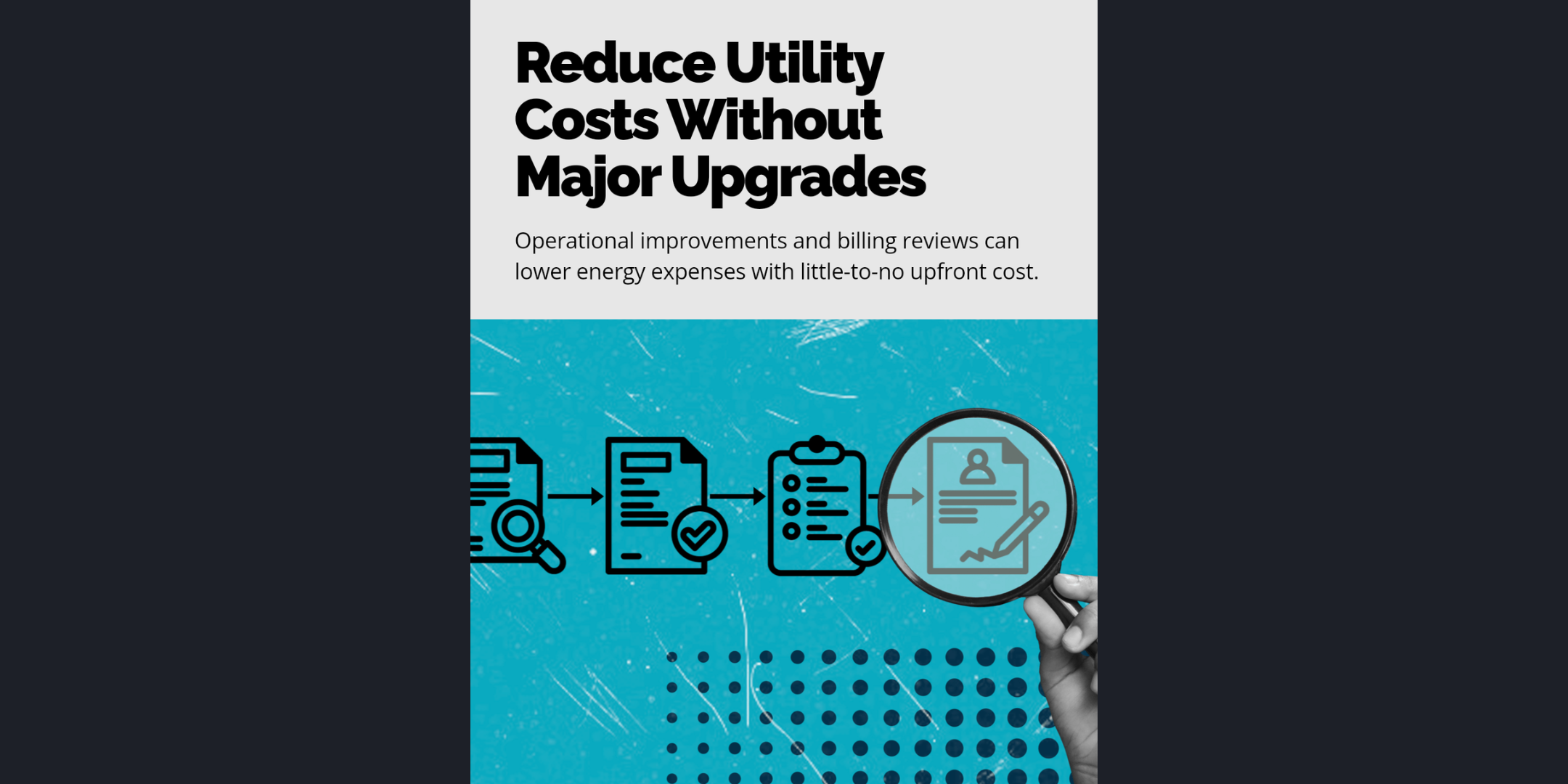
In addition to conservation measures from operations and best-practices, auditing your utility bills can be an effective way to reduce costs by ensuring that all charges are correct and recovering any potential overcharges.
Utility billing errors are common in commercial accounts, with industry practitioners frequently reporting that a substantial share of organizations experience billing discrepancies at some point. Investigations have found thousands of utility accounts billed incorrectly in large utilities’ systems, illustrating that billing errors, while varying by region and provider, are a persistent operational issue. Errors can persist for extended periods because utilities and vendors typically rely on automated billing systems that are not designed to proactively identify account-level discrepancies.
Common Commercial Billing Errors
Incorrect Rate Application and Misclassification: Accounts are often billed under the wrong tariff or an outdated account classification (e.g., being billed a "small commercial" rate when eligible for "large commercial" or industrial rates, or vice versa). In Colorado, it’s not uncommon for charges to be incorrect due to rate hikes being reflected on a bill prematurely.
Meter Reading Inaccuracies: This includes manual data entry errors, faulty equipment, or over-reliance on estimated readings rather than actual usage data.
Duplicate and Overlapping Billing: Companies and organizations may be accidentally charged twice for the same service period or experience overlaps where billing dates on a new invoice conflict with a previous one.
Tax Errors: Commercial entities may pay sales tax on utility services that are actually tax-exempt in their jurisdiction. PUA has also seen bills with incorrect tax rates for the locality.
Misapplied Demand Charges: For electric accounts, demand charges (based on peak usage) can account for a substantial portion of a commercial electric bill, sometimes exceeding half of the total charges depending on the rate structure. Errors often occur in the calculation of these charges or the failure to reset demand meters or demand charge ratchets.
Paying for "Zombie" Accounts or Meters: Businesses may continue to be billed for accounts at closed locations or for meters that are not actually tied to their facility.
Erroneous Late Fees: Fees may be applied incorrectly due to utility processing delays or misaligned billing cycles, even when payments are made on time.
Multiplier Mistakes: If a meter has a "multiplier" to account for high-volume usage, using the wrong ratio can cause usage to be exponentially overstated.
How to Mitigate Billing Errors
To recover past overpayments and prevent future leaks, experts recommend the following:
Conduct Regular Audits: Reviewing the last 12–36 months of invoices, depending on your state, can uncover long-term historical errors eligible for refunds.
Compare Year-over-Year Data: Look for outlier usage in the same month across different years to spot equipment malfunctions or reading errors.
Validate Account Closures: Explicitly verify the date an account was closed and ensure no further invoices are generated for that service.
Use Specialized Audit Services: Many firms, including Peak Utility Advisors, offer contingency-based audit services in which fees are tied to verified recoveries.
For businesses, these measures can reduce utility expenditures while being cash-flow positive. Municipalities and mission-driven organizations can reduce costs and improve budgetary performance, allowing them to spend on other, potentially much more important expenses. Depending on a multi-family building’s metering setup, landlords may be able to credit tenant accounts or tenants may receive credits/refunds directly. For these reasons, utility management experts such as Peak Utility Advisors recommend periodically auditing utility bills for correctness.
Peak Utility Advisors helps businesses and building owners manage utility costs through operational improvements, billing audits, energy/utility capital planning, and energy procurement advisory. Whether reducing peak demand or verifying utility charges, we provide independent advisory support to improve long-term cost control. To discuss your facility’s utility profile, contact matt.jochym@peakutilityadvisors.com or (970) 235-1098.
